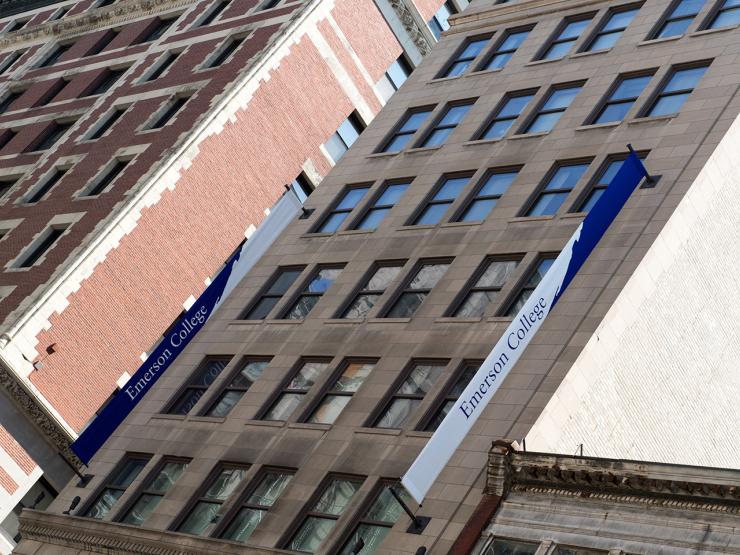
Emerson College’s undergraduate, graduate, and professional and high school programs prepare students for careers in the creative disciplines that influence and inspire our society. Taught by nationally recognized scholars and award-winning professionals, our courses are housed in three Schools: the School of Arts and Interdisciplinary Studies; the School of Communication; and the School of Film, Television, and Media Arts. A total of seven academic departments serve as a resource for students during their Emerson years.
Communication Sciences and Disorders
For those called to serve the voiceless.
Communication Studies
For those who live to create connections.
Journalism
For those driven to illuminate the truth.
Marketing Communication
For those born to build relationships.
Performing Arts
For those who turn stories into worlds.
Writing, Literature and Publishing
For those who believe words matter.
Liberal Arts and Interdisciplinary Studies
For those who refuse to be categorized.